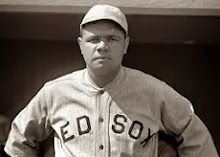
The funny papers
Man, this is a drag.
Labels: future of newspapers
posted by John at 8:43 AM
0 comments


Musings on the convergence of baseball and politics...because, "What is government itself, but the greatest of all reflections on human nature?" Surely, Madison would have said the same of baseball.
Labels: future of newspapers
posted by John at 8:43 AM
0 comments
Here, by the way, is an old list of the Globe's greatest hits. Does the Salzburger family want their legacy to be the closing of newspapers?Speaking Tuesday in Washington at the Reuters Global Financial Regulation meeting, the day after the business magazine Portfolio closed, Mary L. Schapiro, the chairwoman of the Securities and Exchange Commission, suggested that because federal regulators cannot be everywhere at once, experienced reporters constitute additional critical boots on the ground.
“Financial journalists have in many cases been the sources of some really important enforcement cases and really important discovery of practices and products that regulators should be profoundly concerned about,” said Ms. Schapiro. “But for journalists having been dogged and determined and really pursuing some of these things, they might not be known to the regulators or they might not be known for a long time.”
A current accounting of the news business — grim and grimmer by the day — suggests that there may be a subsequent bear market in accountability as well. The day before she spoke, the Audit Bureau of Circulations revealed that for the six months ended March 31, newspapers, which employ the vast share of paid watchdogs, were down an average of 7 percent in circulation from the previous year, a steepening decline that foretells additional layoffs in a business that has already had its share.
On Friday, it was announced that The Washington Post lost $53.8 million in the first quarter of the year, and perhaps more ominously, that revenue in its online properties dropped 8 percent.
Thinking about a federal government in full frolic engorged by stimulus money without a robust Washington Post is not a pleasant prospect.
Labels: future of newspapers
posted by John at 10:44 AM
1 comments
“Boston is much less insular than it was 30 years ago,” said Paul S. Grogan, president of the Boston Foundation, a philanthropic group. The city has long had a chip on its collective shoulder about where it stands in the world, “especially any time you get New York into the picture,” he said, and while that trait has faded greatly, losing local institutions does not help.
Perhaps that is why, along with the desire to save The Globe, many Bostonians argue for local ownership, with a particular suspicion of answering to anyone in that bigger city on the Hudson.
One blogger advocated an arrangement similar to the community foundation that owns the Green Bay Packers football team. Several members of Boston’s business elite have been rumored to be interested in buying The Globe, but none have confirmed it and most have denied it.
At least a few local investors showed interest in buying the paper a few years ago, but that was before the newspaper business slid into its deep slump.
“You have to have local ownership that wants to buy the paper,” Mr. Menino said. “It’s questionable. I haven’t heard of anybody.”
Losing The Globe “would rock the city psychologically,” Mr. Grogan said. “It doesn’t square with the more confident, more worldly self-image that Boston has.”
But that impact would split along generational lines, as it does between Julia Quinn and James Monti, strangers who rode side by side last week on a Red Line subway train.
Ms. Quinn, a medical assistant in her 60s, said she read The Globe almost every day, though its politics were too liberal for her tastes. “Boston’s not a podunk town — it’s got to have a good paper,” she said.
Mr. Monti, an unemployed construction worker in his 20s, said he only occasionally picked up a paper, “mostly to see how the Sox are doing,” and was just as likely to find the news online. He shrugged off the prospect of losing The Globe, saying he could go elsewhere for information.
Labels: future of newspapers
posted by John at 9:58 AM
0 comments