Friday, August 06, 2010

There's that asterisk again

The other day, a WNYC announcer, giving the day's local news highlights, mentioned that Alex Rodriguez had hit his 600th home run, but it came with an asterisk, she said, because he'd admitted to steroid use as a Texas Ranger.

After regaining control of the car and my supreme annoyance, I decided not to call the station to complain that there are no "asterisks" in the record books.

I was thinking about that when I turn to today's "News Analysis," in which long time sports writer Harvey Araton admires how strongly Aaron hit towards the end of his car and approaching Ruth's record. By implication, a negative comparison with the "ethically" impure Barry Bonds, and the perhaps physically declining Alex Rodriguez (despite being the youngest to reach 600, his HR pace is significantly down this year, kind of a small sample to start giving up on the guy now).

Rodriguez’s 600th home run, slugged off Toronto’s Shaun Marcum on Wednesday afternoon at Yankee Stadium, made him the seventh, and youngest, player to achieve that milestone. Now he begins the climb toward 700 before — barring impairment or shocking deterioration — taking aim at Babe Ruth (714), Aaron (755) and Bonds (762).

But how will Rodriguez get there — in a slugging frenzy, like Bonds, or as a 40-something designated hitter, hanging on as much for the record as for his paycheck?

Remember how Aaron’s career achievements were portrayed as Bonds obliterated baseball’s geriatric slugging standards and ultimately a nation’s believability? Compared with a 37-year-old who clubbed 73 home runs in 2001, Aaron was mildly derided as an earnest toiler who never hit 50 in any one of his 23 major league seasons.

Re-examined in the light of subsequent steroid revelations and admissions, Aaron’s assault on Ruth becomes more impressive than anything ever seen during the recent era of lying eyes.

“Two of Aaron’s best years for homers were at age 37 and 39,” said David Vincent, a home run historian for the Society for American Baseball Research. “He hit 47 in ’71 and 40 in ’73, the year before he passed Ruth. He doesn’t necessarily fit the mold for sluggers in their late 30s.”

Actually, Aaron broke the mold, hitting 203 home runs in the five seasons after his 35th birthday and 245 over all, second in that category behind the presumed-to-be-chemically-enhanced Bonds. By comparison, Willie Mays hit 37 at age 35 and never again topped 28. Ken Griffey Jr. hit 35 at 35 and went steadily downhill. Reggie Jackson hit 39 at 36 and faded like a California sunset.

After Bonds, Mark McGwire and Sammy Sosa taught us to trust no one over 35, it became too easy to overlook Aaron’s stunning late-race sprint on Ruth — who, for the record, also fared pretty well as a quasi geezer, hitting 49 home runs at 35 and following up with 46, 41 and 34.


Look, I have great admiration for Mr. Aaron, who grew up under Jim Crow and came up through the Negro Leagues. I remember being utterly shocked as a boy by the death threats he received as he approached Ruth's record. Giants walked among us. Even if they were Braves.

But to write about the accomplishments of his Sunset Years and take pot shots at McGwire and Sosa as cheating geezers seems odd. If you are going to extol the man for "having some of his best years" in the early 70s, and not mention the fact that the pitcher's mound was lowered by five inches in 1969 because averages and power numbers weren't high enough for MLB leadership 'cause we know fans love the long ball, is not being very honest.

Also and...I'll be honest myself and note that power numbers did not magically climb immediately following the lowering of the mound, as I learned today in this study the magnificent Joe Posnanski brings to our attention, as power numbers did in 1918-1920 ("jackrabbit ball"), 1976-7, and 1987 -- years long before the appearance of steroids in baseball. I only mention to remind us that there are all manner of ways we know MLB can affect numbers (expansion teams, size of the stadiums built in the 90s, the construction of the baseball itself -- remember the "dead ball era?"), and we know the players themselves can through a variety of means (the hardness of the bats they choose, better conditioning -- Aaron, whose off-season conditioning, we're told, was "run, run, run," apparently knew the importance of the lower body in hitting better than many of his peers, etc.).

What we don't know is what effects steroid use have had.

F'rinstance, Araton mentions that three of Rodriguez's best seasons corresponded with the three in which he admits to using steroids as a Ranger*. What Araton doesn't feel necessary to mention: balls fly out of the stadium in which Rodriguez played his home games those years because of its proportions, Texas heat, and windscreen. Meanwhile, Yankee Stadium -- built for the left handed Ruth -- is supposed to be death to right handed power hitters, such as Rodriquez.

So, let's drop the asterisk talk and tales of moral superiority.

* Which is only partially true. His third highest year was 2007, as a Yankee, after testing had begun.

Labels: , ,

Wednesday, May 06, 2009

Worse than steroids

It seems that Alex Rodriguez is now accused of something that will really lead to trouble for him: tipping pitches to opposing batters. But with all due respect to Doug Glanville, would such an egregious crime really be possible given the movement of players from team to team? Surely someone would have ratted him out long before Selena Roberts came knocking and you can bet his team's pitching staff would have been, ahem, displeased.

As for Roberts' overall charges, I think Steve Goldman fairly nails it (I'm so sick of hearing that Ms. Roberts is such "a respected writer" that her charges are unassailable).

Roberts has a weak track record in terms of thinking and knowledge of baseball, and she also led the charge against the Duke lacrosse players in the 2006 rape case, the one that ended with the prosecutor who brought charges being discharged. As Jason Whitlock wrote on Saturday, Roberts has never been called to account for these columns. Among her last words on the subject: "No one would want an innocent Duke player wronged or ruined by false charges -- and that may have occurred on Nifong's watch -- but the alleged crime and the culture are mutually exclusive... A dismissal doesn't mean forget everything. Amnesia would be a poor defense to the next act of athlete privilege."

Yes, let's look on the bright side, because jocks having slightly more restrained keg parties makes calling innocent young men rapists worthwhile.

I don't trust Roberts' judgment, I don't trust her understanding of baseball, and I don't trust her motives in writing a book about Alex Rodriguez that surely would not exist were it not intended to be a hit piece. If Rodriguez was juicing in high school or kindergarten, it goes to character, not performance, and we have had countless reasons to know that he's not Mother Theresa in the clubhouse or off the field. Neither were Ty Cobb, Babe Ruth, Ted Williams, Mickey Mantle, et al. Cobb's reward was to die friendless, Ruth and Mantle died young, the causes of their cancer probably not unrelated to their youthful carousing, and Williams' own son had him decapitated and stuck in a freezer.

On the field, they all won their pennants, and for now that should be our main area of interest in regards to Mr. Rodriguez, because the personality stuff is off the slightest relevance. If Derek Jeter loves or hates Rodriguez matters less than this basic equation: Jeter singles and Rodriguez hits a home run. That's the only relationship, the only trust that needs to be between them -- and needs to be between Rodriguez and us.

Ya think?

One thing I am fairly certain of, Ms. Roberts has never much liked Mr. Rodriguez.

A-Rod’s Properties and Charity Suggest Some Stinginess


Rodriguez Is a Bauble A Champion Doesn't Need


No Longer Trying, Rodriguez Positions Himself for Success


Not a single story touched upon Alex Rodriguez's ability as a baseball player -- the only function for which he is paid and for which he has received three MVP awards, twice while wearing pinstripes.

Labels: ,

Wednesday, February 18, 2009

Games played

Cliff Corcoran notes the one benefit Rodriguez gained from using PEDs as a member of the Texas Rangers -- no need to take a day off. It's overlooked -- the ability of a player to recover quickly isn't just about getting a thicker neck, but it also should help get through the rigors of the toughest season in sports.

As a fan, I'm not sure I have a problem with that.

On a related note -- and be advised, there will be no posts about either Alex's or Bristol's much covered media appearances this week -- Scott Lemieux takes a closer look at the "sanctity of the record books."

Labels: ,

Tuesday, May 13, 2008

Damn Yankees

For those who have claimed that Jorge Posada is overrated and A-Rod sucks, well, now you get to see what the team looks like without them. And it ain't fun to watch.

Labels: ,

Monday, November 26, 2007

Alex Rodriguez, free agent

Word is the Yankees and Rodriguez and the Players' Union have come to terms over the marketing contract for Rodriguez's career milestones.

I hope Mike Lupica is crying bitter tears that the Yankees did not decide to take the "principled stand" and tell Mr. Rodriguez to take his purse swinging ways elsewhere. Idiot.

In any case, over at Hardball Times, John Brattain asks us to consider an interesting proposition: that while Scott Boras announced A-Rod's opting out of the contract during the Red Sox dismantling of the Rockies, Rodriguez himself opted for free agency a few weeks later.


If his goal was simply to get a package worth $275 million why bother opting out? The Yankees were already in the ballpark (factoring in the Rangers’ money and the three years remaining on the previous deal) with their extension offer. Something else that has to be kept in mind is seven years ago, A-Rod did not agree to terms until late January 2001. Boras feels time is an asset in increasing offers; that is why he wanted Rodriguez on the market—to get a bidding war going that would last a month or two.

Another thing to consider is how quickly Boras announced the opt-out coupled with making sure A-Rod had no contact with the Yankees whatsoever. Reports indicate that the future Hall of Famer had to be convinced by Boras to exercise the clause in his contract. It appears that Boras felt that any interaction between his client and New York’s front office/ownership could result in a quick agreement on an extension. To get Rodriguez into the marketplace meant ensuring that such a meeting not take place. While part of the timing of the opt out announcement was to make a point about how A-Rod could match the Fall Classic headline-for-headline, the other part evidently was to guarantee there would be no opportunity for the Yankees to make an offer that the third baseman would probably accept.

Every indication is that Rodriguez wished to remain where he is and his agent convinced him that even after opting out the Yankees brass’ proclamation about not negotiating simply was not the case.

Might the Yankees have re-entered the bidding even had A-Rod not made the gesture of making contact? We will never know, but one thing we have learned is this: Rodriguez did not want to take any chances. It gives us an idea of how important remaining in pinstripes was to Barry Bonds’ heir apparent as home run king.

We do not know what the final numbers of the new deal will look like yet; however while it will be a new record deal, it is nowhere near as impressive as it was seven years ago for several reasons. To begin with, back in 2000 the next highest contract was $92 million less—the deal that Manny Ramirez received from the Red Sox. A-Rod’s new deal will be just $23 million higher than the old record. Further, after Ken Griffey Jr. was traded to the Reds, he signed an extension with Cincinnati. While it was perceived that Junior gave the Redlegs a hometown discount, the total package was the highest given a player to that point in time.

Still another consideration is factoring in inflation, the value of the dollar, and that baseball’s revenue increased from under $4 billion to over $6 billion since 252 was signed. Rodriguez’s aggregate salary rose from $25.2 million to $27.5 million—a raise of just $2.3 million. Does anybody actually think that Scott Boras opted out and created this many headaches and bad publicity for his client just to get an extra $2.3 million annually?
As we learn more we also learn that Rodriguez is smarter and more independent of Boras than the Knights of the Keyboard and the Radio Waves give him credit for. I mean, it's a helluva lot smarter talking about the potential to make real money over time with Warren Buffet than with Scott Boras.

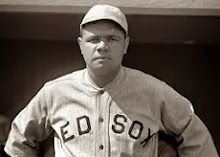
Rodriguez is no fool and does have a strong sense of baseball history. He recognizes that had Harry Frazee been more interested in baseball than Broadway and had never sold Babe Ruth to the Yankees, the 714 homeruns The Big Bam hit for the Beanbags would have gotten him the keys to the city, a nice car, and free meals for the rest of his life at any of Boston's fine eateries. He would not have been the sports and marketing star of the 1920s he would become as he hit those homeruns while wearing pinstripes in the glare of New York.

Labels: ,

Weblog Commenting by HaloScan.com Site Meter